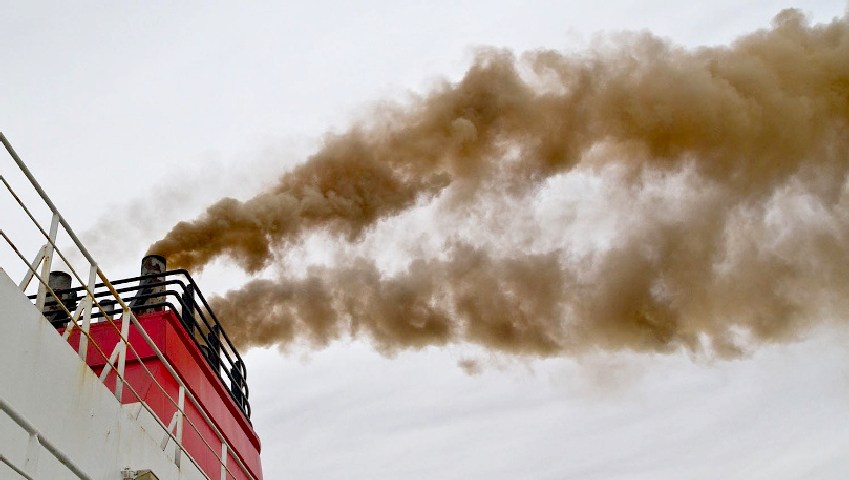
The
Cleaner Ocean Foundation works to help protect the "seven seas"
from the effects of anthropogenic atmospheric pollution like this ship
that is belching diesel fumes like there is no tomorrow. We'd like to
preserve tomorrow for our children.
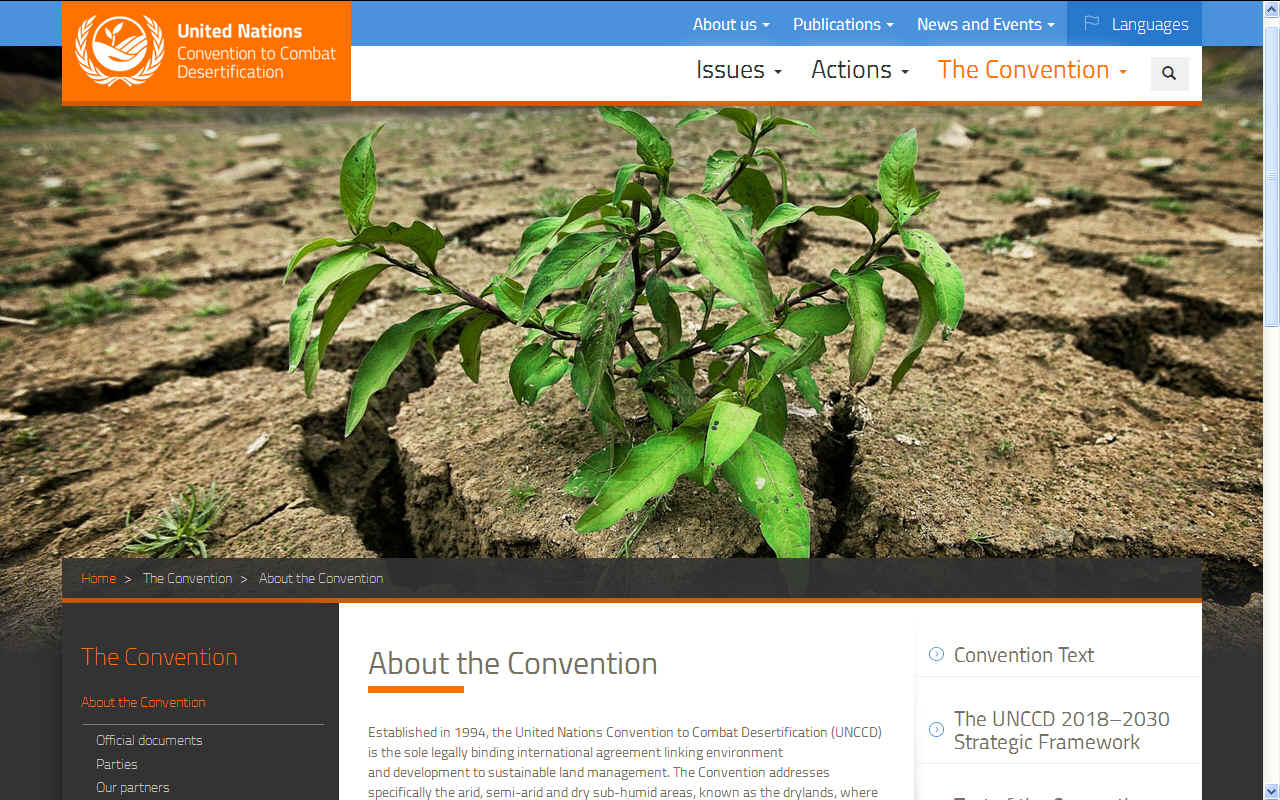
Desertification
is such a serious problem that the United
Nations has a Climate Convention to seek to combat
the problem. They hold annual conferences involving something like 197
parties, known as Conferences Of the Parties
(COPs). They UN also has a Biodiversity Conference, the latest being COP15
in December 2022. And desertification conferences. But all of that is
useless, without the political will of the parties to change.
Desertification
and ocean acidification go
hand in hand; the cause being the same: a global economy based on the
burning of fossil fuels.
Clearly, the loss of potential agricultural land to barren wastes puts additional pressure on ocean fisheries in the harvesting of wild fish and aquaculture for farmed fish, to make up for the loss of food production leading to security issues that is sure to involve millions starving and dying from malnutrition as world populations increase from 7 billion to 9 billion souls.
By 2025 the UN says two-thirds of the world will be living under “water-stressed” conditions – when demand outstrips supply during certain periods – with 1.8 billion people experience absolute water scarcity, where a region’s natural water resources are inadequate to supply the demand. Migration is likely to increase as a result of desertification, with the UN estimating that, by 2045, it will be responsible for the displacement of some 135 million people.
The importance of ensuring that land is well-managed is noted in the UN’s 2030 Agenda for Sustainable Development, which declares that “we are determined to protect the planet from degradation, including through sustainable consumption and production, sustainably managing its natural resources and taking urgent action on climate change, so that it can support the needs of the present and future generations”. Specifically, Goal 15 states our resolve to halt and reverse land degradation.
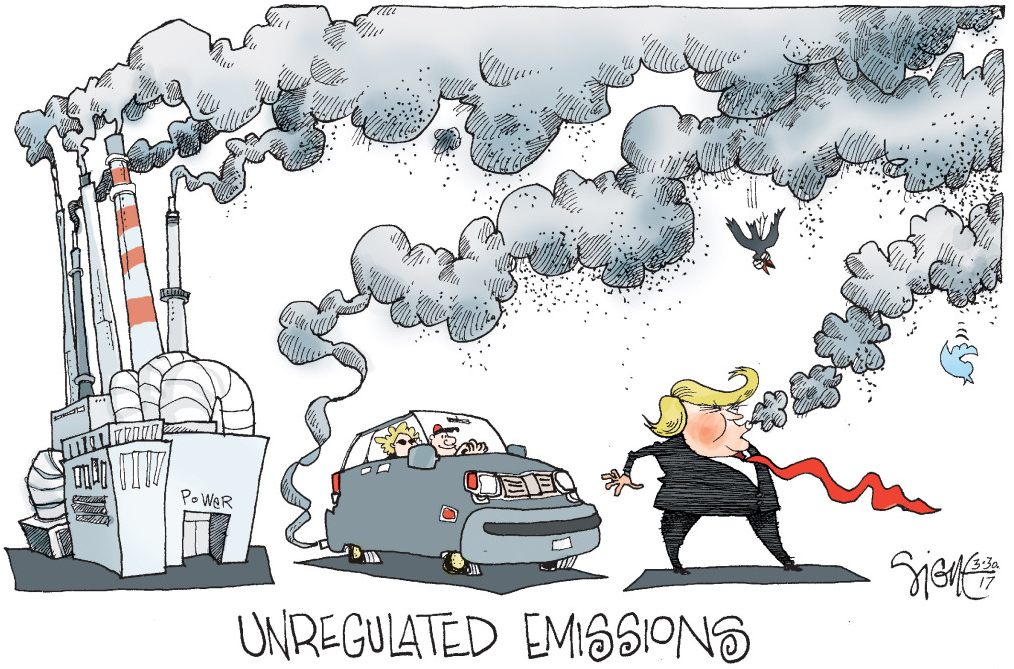
Some
countries have policies that allow, even encourage, dirty ships and
trucks to operate. President Trump withdrew the US from the Paris
Agreement. We anticipate that President Joe Biden and his new cabinet,
potentially including John
Kerry, will get climate talks back on the rails.
IT'S NOT JUST ABOUT SAND
In his message, Ibrahim Thiaw, the Executive Secretary of the UN Convention, said there are only three things all people need to know about the World Day to Combat Desertification:
- It isn’t just about sand,
- It isn’t an isolated issue that will quietly disappear; and
- It isn’t someone else’s problem
“It’s about restoring and protecting the fragile layer of land which only covers a third of the Earth, but which can either alleviate or accelerate the double-edged crisis facing our biodiversity and our climate,” he said.
The international community, he continued, has acknowledged the central role our land plays in our lives and livelihoods, and since the creation of the Convention, some 196 countries, including Brazil, Indonesia, China and India, as well as the European Union, have signed up to coordinated actions for sustainable land management, including reforestation.
“However, there are even more stories about how poor land management has degraded an area twice the size of China and shaped a farming sector that contributes nearly a quarter of all greenhouse gases,” he said, stressing that there are even more stories about how half the people on the planet are affected by that damaged land or live in urban areas, consuming resources that require 200 times as much land as their towns and cities and generating 70 per cent of emissions.
“Yet, the world is determined that by 2030, we will switch from destroying the
Earth to making it productive enough to grow a better future for everyone. If we take action to restore our degraded land, it will save $1.3 billion a day to invest in the education, equality and clean energy that can reduce poverty, conflict and environmental migration,” noted Mr.
Thiaw.
And while, better land management does not hold all the answers, it offers a stepping stone to reach global goals by 2030 and then act as a natural multiplier of their benefits.
“So, for this World Day to Combat Desertification, I am calling on everyone to drive this change from the ground up; to make choices and take action, either privately or professionally, as producers or consumers, to protect and restore our land. Let’s grow the future together,” he said.
THE REGIONS
Five world regions – Africa, Asia, Latin America and the Caribbean (LAC), Northern Mediterranean, Central and Eastern Europe - have the important job of deciding how to implement the United Nations Convention to Combat Desertification
(UNCCD). The Convention Text includes five annexes, which each concern one of these world regions.
The implementation of the UNCCD is organized around these five regional implementation annexes.
CALLING
A HALT - INTERNATIONAL MORATORIUM
ON DEBT
You
have to take a look at how we got here. It's all about the money.
Political vandals who are the policy makers and politicians who allowed
economics to come before lives. The world has been living on borrowed
money and time, while the Red
Flags have been flapping in the wind for all to see. This is not the
time to beat around the bush and be politically correct, because
politics is not correct. It is demonstrably corrupt, with underlying
trends and loopholes that must be plugged. With the EU in turmoil and
even members of the UK's House of Lords, with offshore accounts stacked
with illicit cash from PPE profiteering (allegedly), from the awarding
of contracts. To the tune of £29
million pounds.
It
seems that we do need wealth
and windfall taxes. That should be transparently directed to correcting
the problems that the wealth creation caused in the first place. In
nature, we have such checks and balances. No food, you die. No water,
you die.
Borrowing
to pay for borrowing, and yet more borrowing, is proof positive that
national and international economics is fatally flawed. We need to get
back to something tangible like the gold standard, or create an $AgriDollar,
based on actual, sustainable, food production capability. Not some
fictitious, invented financial system that cooks the land and boils the
oceans. This is 'Alice in Wonderland' politics!
Ships
that use bunker fuels, nearly all cargo and cruise liners in 2020, are
killing marine life. You can help us to demonstrate clean shipping is
possible, by becoming a partner to the Elizabeth Swann project.
Please use our
A-Z INDEX to
navigate this site